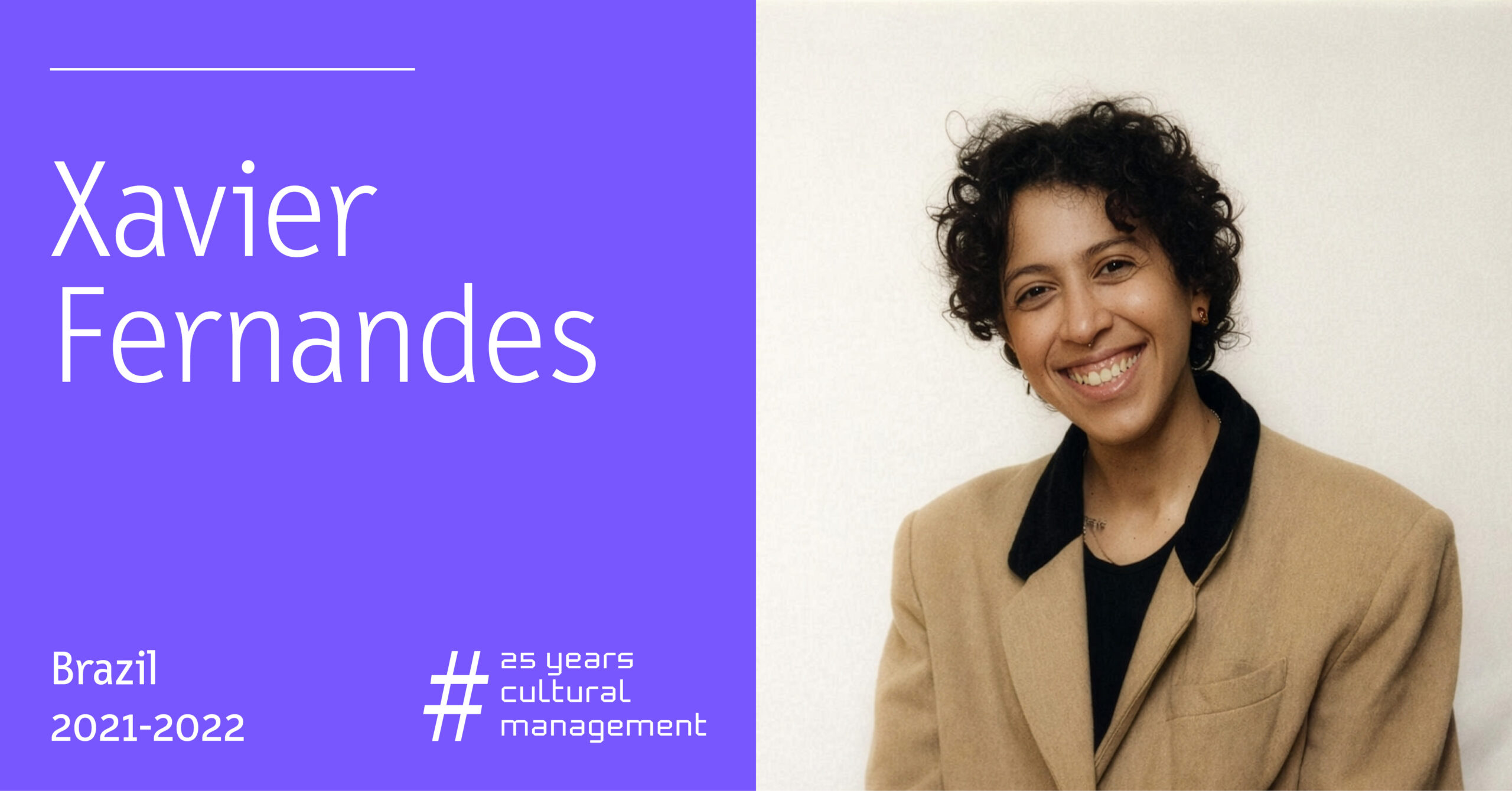
Xavier Fernandes is an alumnus of the Master’s in Arts and Cultural Management at UIC Barcelona (class of 2021–2022). A UX strategy expert, systems designer, and cultural mediator, Xavier has built a distinctive career at the intersection of design thinking and community building. Currently, they lead Artist Ally, an educational platform and creative ecosystem based in Barcelona that acts as a bridge between strategic training and sustainable artistic practice. In this interview, they reflect on how user experience can transform cultural mediation.
Xavier, you connect UX and systems design with cultural programs. In one sentence, how do these worlds speak to each other?
User experience is fundamentally about people; “systems design” simply helps us understand the complex layers—institutions, cities, and communities—where those people interact. By combining them, we can design cultural programs that aren’t just “events,” but meaningful responses to the actual needs and motivations of a community.
You were working in the tech sector in the Netherlands. What was the “click” or turning point that led you to the UIC Barcelona Master’s?
I had been a designer for five years, but I was always the person starting diversity committees or programs to reduce loneliness among expats. During the pandemic, the contrast became sharp: I loved the UX methodology, but applying it only to tech felt limiting. I wanted a direct social impact. I chose UIC Barcelona because, after being confined at home, I craved its strong connection to the city’s physical ecosystem—its museums, streets, and cultural spaces.
Before launching Artist Ally, you worked on community engagement at SAMAMBA. What is the secret to moving beyond a one-off event to building a real community?
It grows from proximity and genuine relationships. You can’t have engagement if people don’t feel seen. At SAMAMBA, many of our guests were immigrants; we created gamified, collaborative formats where the audience became the artwork. Interestingly, the strongest community emerged among the volunteers. We realized that community forms when people connect not just to a project, but to one another.
You are currently a UIC Resident at Fabra i Coats – Fàbrica de Creació. What is the mission of your project, Artist Ally?
It’s a bridge for international artists arriving in Barcelona. We do two things: first, we map the city’s artistic infrastructure so they know where to produce and who to call. Second, we tackle the “off-studio” dimension. Many artists are brilliant creators but have never been taught the strategic side—how to organize work, draft contracts, or communicate with institutions. The residency at Fabra i Coats has given us the physical space and institutional credibility to turn this into a real ecosystem.
Did this idea emerge from a specific gap you noticed in the sector?
It came from watching my artist friends. Because my background is in marketing and UX, I was always the one informally helping them review portfolios or clarify concepts. When I became an immigrant myself, I realized how disorienting a new cultural ecosystem can be. Artist Ally was born where those two needs meet: the need for strategic tools and the need for local integration.
You define Artist Ally as an “on/off” platform that combines digital and physical experiences. How do these two worlds complement each other?
Our lives are already hybrid. The digital side is our “knowledge hub”—curated maps and educational tools accessible anytime. The physical side is about human connection. We organize gatherings in Barcelona because cultural careers are built through handshakes and encounters that can’t be replaced by a screen.
Looking back at the Master’s, which tools or subjects were the most valuable for leading your own project?
The direct contact with Barcelona’s institutions was eye-opening; it helped me understand their priorities and “language.” Understanding cultural policy and funding frameworks gave me a map of how a small initiative can align with larger social goals. Also, the small class size was a gift—it allowed for a mentorship-style relationship with professors that continues today.
What are the “must-have” elements when designing a sustainable cultural project?
I like the Japanese concept of Ikigai: the intersection of what you love, what you’re good at, what the world needs, and what the world values. If your project sits there, it’s easier to sustain. But you also need to understand the institutional environment; projects grow stronger when they build alliances with public priorities.
If you could go back to day one of Artist Ally, what advice would you give yourself about focus and rhythm?
Two principles: “slowly but surely” and “less is more.” I’ve learned that a project is a garden, not a product launch. You can’t rush growth. Nurturing the existing community is more important than expanding as fast as possible. A slower, more attentive rhythm is what makes it sustainable for everyone involved.
Finally, what would you say to a student dreaming of launching their own project?
Be honest with yourself about your motivations. The world has many needs; the challenge is finding where those needs meet something you genuinely care about enough to do without an immediate reward. And secondly: find your people. Cultural projects don’t grow in isolation; the mentors and collaborators you meet along the way are your most valuable asset.